Аукцион Bidspirit | Alexander Bashbeuk-Melikian (Armenian, 1891 -
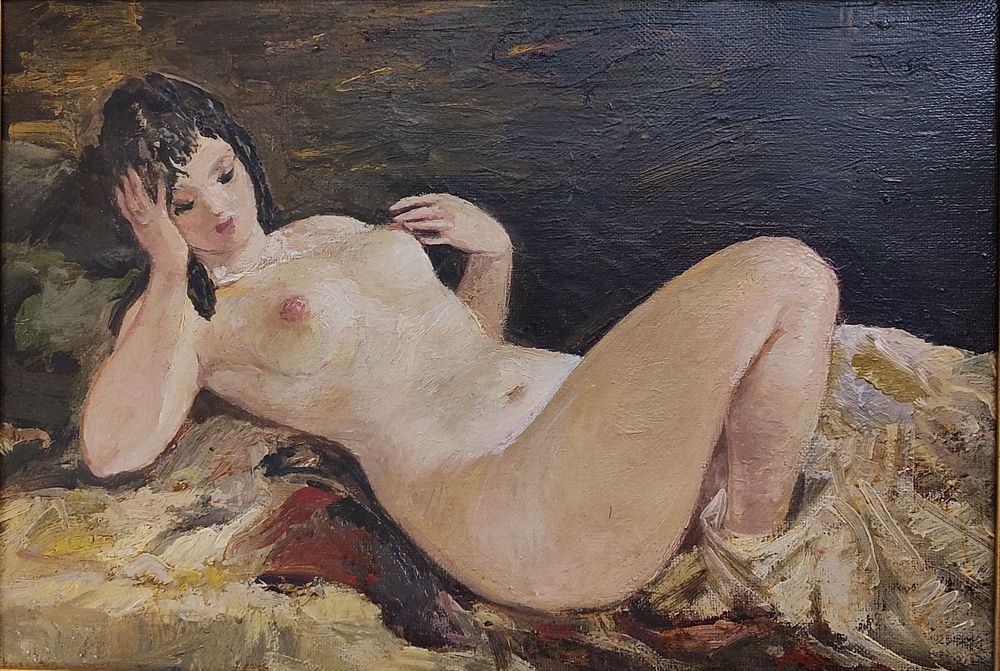
Alexander Bashbeuk-Melikian (Armenian, 1891 - 1966) - Alexander Bashbeuk-Melikian (Armenian, 1891 - 1966), oil on canvas, signed u.r., 28 x 40 cm. Notes Alexander Alexandrovich Bazhbeuk-Melikyan was one of the most original and influential painters of the South Caucasus in the twentieth century. A leading figure of the Tbilisi avant-garde, he developed a highly individual artistic language that combined Symbolism, Post-Impressionism, and modernist experimentation, leaving a profound impact on both Armenian and Georgian art. Born in Tiflis (present-day Tbilisi) in 1891, Bazhbeuk-Melikyan studied at the School of Painting and Sculpture of the Caucasus Society for the Encouragement of Fine Arts before continuing his education in Moscow and at the Imperial Academy of Arts in St. Petersburg. Following military service during the First World War, he returned to Tiflis in 1917 and embarked upon an independent artistic career. During the vibrant cultural atmosphere of the 1920s, he became one of the central figures of the Tbilisi avant-garde, working alongside artists and intellectuals who shaped the modern artistic identity of the Caucasus. As a respected educator, he taught at the studio of Mose Toidze and later at the Georgian Academy of Arts, influencing a generation of painters, including several leading Armenian artists of the Soviet era. Bazhbeuk-Melikyan's oeuvre is distinguished by its theatrical imagination, rich colorism, and deeply personal symbolism. Female figures occupy a central place in his work—mysterious beauties, performers, dancers, jugglers, and mythological characters rendered with sensuality, psychological depth, and expressive vitality. While sharing certain affinities with his contemporary Lado Gudiashvili, Bazhbeuk-Melikyan developed a more dramatic and emotionally charged visual language. The circus and carnival became recurring motifs throughout his career. He was fascinated by their poetic and timeless qualities, transforming performers into symbolic protagonists inhabiting dreamlike worlds suspended between fantasy and reality. Equally important were his depictions of old Tbilisi and the multicultural urban life of the Caucasus, subjects through which he captured the unique atmosphere of the region. His early works are characterized by dark, richly modulated palettes and dramatic contrasts of light and shadow, reflecting the influence of Arnold Böcklin and the Old Masters. In later years, his paintings evolved toward a brighter and more liberated chromatic range while retaining the expressive brushwork and romantic imagination that define his style. A perfectionist of extraordinary rigor, Bazhbeuk-Melikyan destroyed the majority of his own paintings, preserving only those that met his exacting standards. Although he is believed to have created more than two thousand works, only a small fraction survived, contributing significantly to their rarity and desirability among collectors today. Awarded the title of Honored Artist of the Georgian SSR in 1961, Bazhbeuk-Melikyan is now recognized as one of the foremost masters of Caucasian modernism. His works are held in major museum collections and are highly sought after for their rarity, exceptional painterly quality, and unique position within the artistic heritage of Armenia, Georgia, and the broader Russian avant-garde tradition.